.png)
.png)
Get 300+ Security Sources Into Databricks
Security data reaches Databricks today through custom Spark jobs and hand-built pipelines that break when sources change. Monad's Databricks Lakehouse connector replaces them: stream security data from 300+ cloud and on-prem sources into your Lakehouse via Autoloader or Zerobus and route the same data to any other destination that needs it. Validated by Databricks as a Brickbuilder partner, Bronze tier, Connected status.

The Solution
Every security workload on Databricks starts with the same unglamorous problem: getting the data there. Custom Spark jobs, hand-maintained staging buckets, and notebook parsers all work until an upstream API changes or the engineer who built them leaves. Monad's Databricks Lakehouse connector replaces that buildout with two ingestion patterns. Autoloader stages gzip-compressed JSONL to a Unity Catalog Volume, and you choose who owns the ingestion job: Monad can create and schedule the Autoloader job for you, or your team runs its own cloudFiles job against the volume. Zerobus streams records directly into an existing Delta table for low-latency ingestion, with no volume staging and no SQL warehouse in the path.
Both patterns authenticate with OAuth M2M service principals, and Test Connection validates every required permission before data flows, so a missing grant surfaces during setup instead of as a silent gap in coverage. Every connector is tested daily against live APIs, so pipelines don't quietly break when upstream sources change.








De-Risk Your SIEM Migration
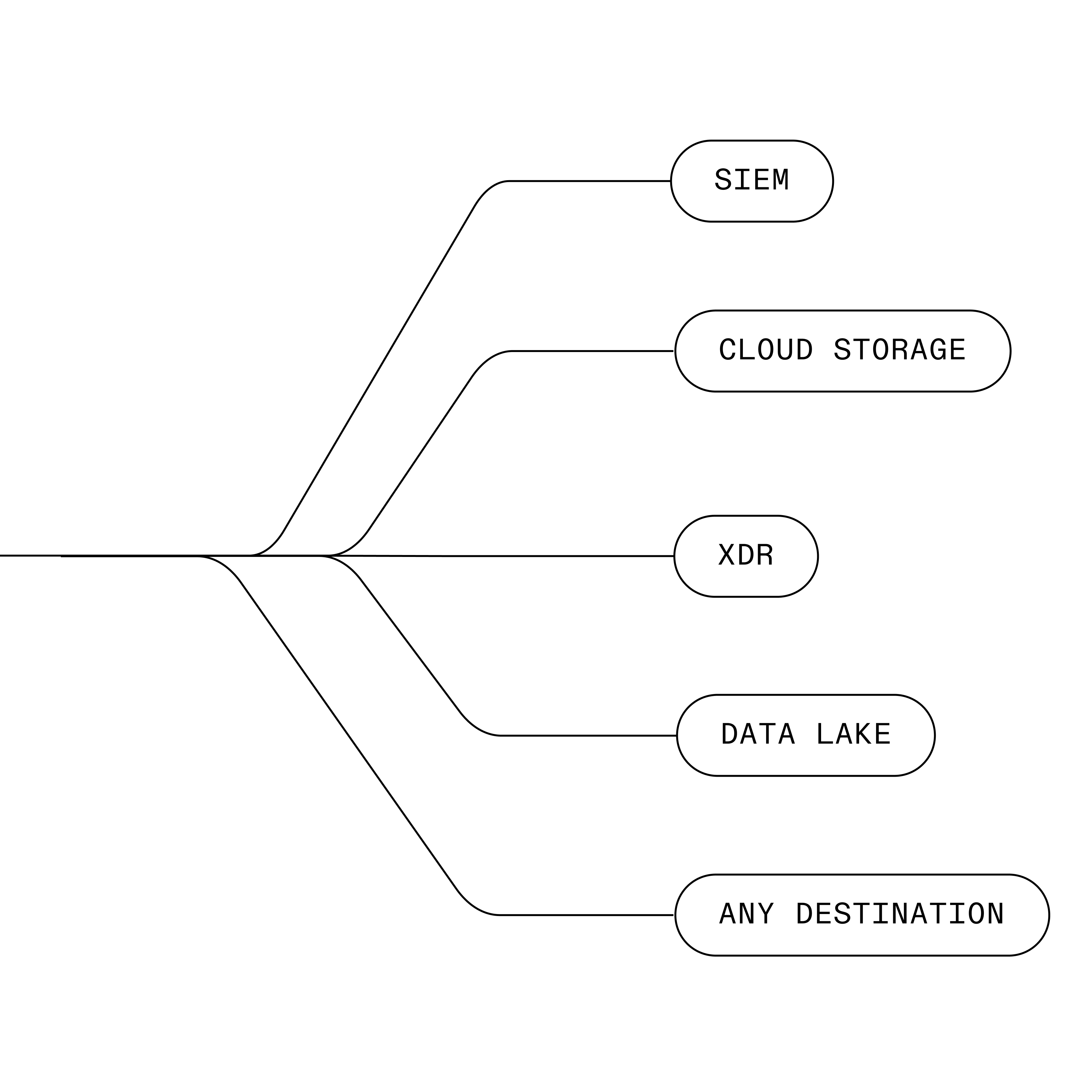
SIEM migrations don't happen in a single cutover. Teams need to run their legacy SIEM in parallel while they build confidence in the new environment. Monad makes this practical: route the same data to Databricks and your existing SIEM simultaneously, then shift traffic source by source as you're ready. No duplicate pipelines. No hard cutover risk.
Pick Your Ingestion Pattern
Autoloader stages gzip-compressed JSONL to a Unity Catalog Volume for file-based ingestion with Databricks-native schema evolution. Set up the Autoloader job yourself or let Monad create and schedule it for you. Zerobus streams records directly into Lakehouse, no volume, no SQL warehouse. Pick the pattern that matches how your team already runs Databricks.
Land Query-Ready Data in Lakehouse
Raw JSON dumped into Databricks means analysts writing ad hoc parsers in notebooks instead of running queries. Monad can normalize data to common schemas, including OCSF, before it lands in your lakehouse, so detections, dashboards, and models run on consistent field names across every source from day one.
Cover Cloud and On-Prem in One Platform
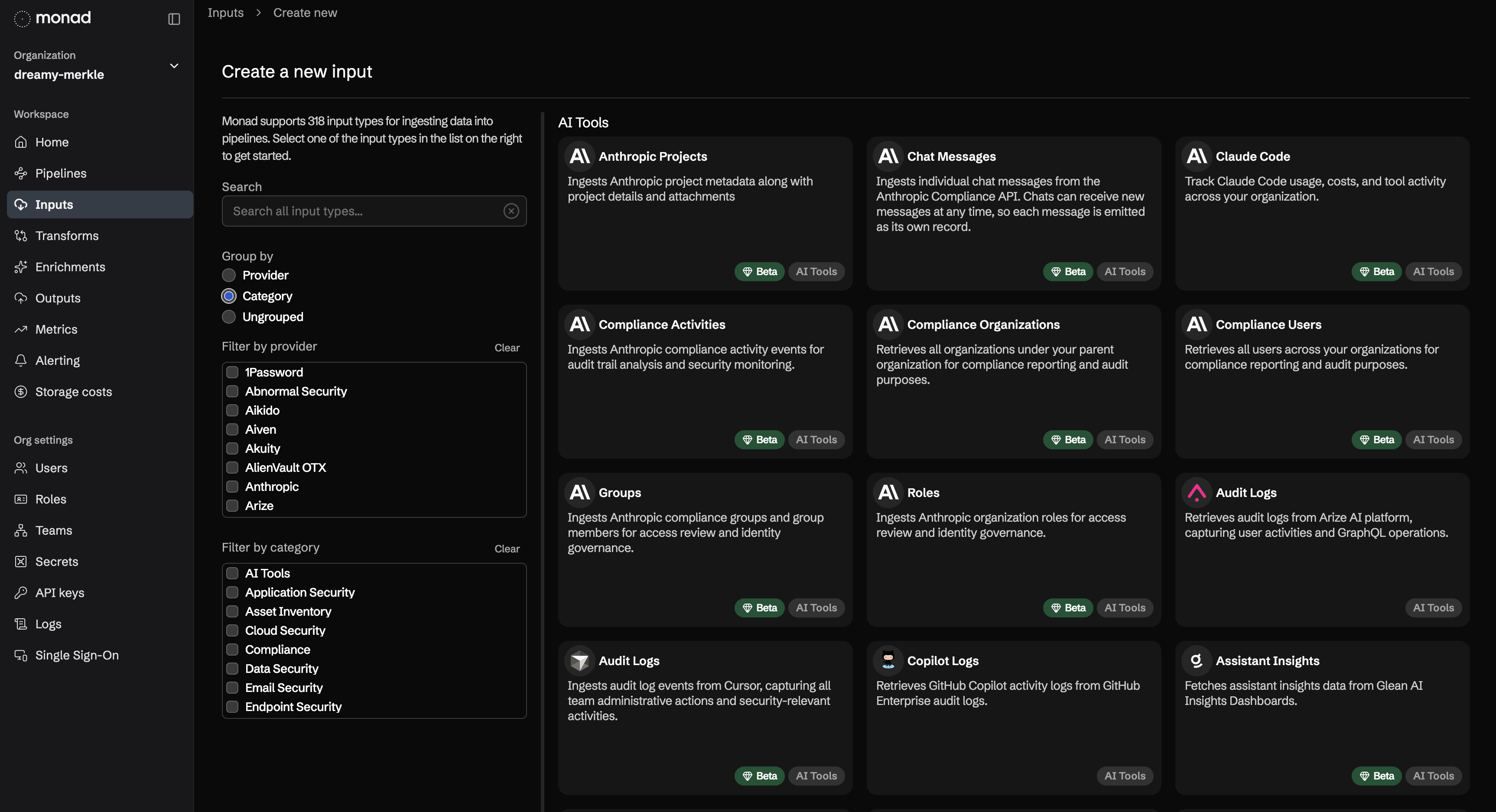
Enterprise security environments span cloud services, SaaS tools, and on-prem infrastructure. Monad's 300+ connectors reach across your entire stack, cloud and on-prem, managed from a single platform. Every connector is tested daily against live data sources, so coverage doesn't silently break.


• Use Case:
Get 300+ Security Sources Into Databricks
Security data reaches Databricks today through custom Spark jobs and hand-built pipelines that break when sources change. Monad's Databricks Lakehouse connector replaces them: stream security data from 300+ cloud and on-prem sources into your Lakehouse via Autoloader or Zerobus and route the same data to any other destination that needs it. Validated by Databricks as a Brickbuilder partner, Bronze tier, Connected status.
Real numbers from real pipelines.

of SIEM-bound telemetry filtered out as noise before it ever costs you.
for operational logs routed to the data lake at a tenth of SIEM cost.
new sources go live in minutes, with zero custom parsers to maintain.
Route the same data to Databricks and your SIEM. Shift when you're ready.
Walk through how security telemetry moves from your existing sources into Databricks: connect sources without custom parsers, filter and normalize in-flight, and land query-ready data in Lakehouse while running your existing SIEM in parallel.
.png)

Two ways to land security data in the Lakehouse.
Every security workload on Databricks starts with the same unglamorous problem: getting the data there. Custom Spark jobs, hand-maintained staging buckets, and notebook parsers all work until an upstream API changes or the engineer who built them leaves. Monad's Databricks Lakehouse connector replaces that buildout with two ingestion patterns. Autoloader stages gzip-compressed JSONL to a Unity Catalog Volume, and you choose who owns the ingestion job: Monad can create and schedule the Autoloader job for you, or your team runs its own cloudFiles job against the volume. Zerobus streams records directly into an existing Delta table for low-latency ingestion, with no volume staging and no SQL warehouse in the path.
Both patterns authenticate with OAuth M2M service principals, and Test Connection validates every required permission before data flows, so a missing grant surfaces during setup instead of as a silent gap in coverage. Every connector is tested daily against live APIs, so pipelines don't quietly break when upstream sources change.
Built for how you actually run Databricks.
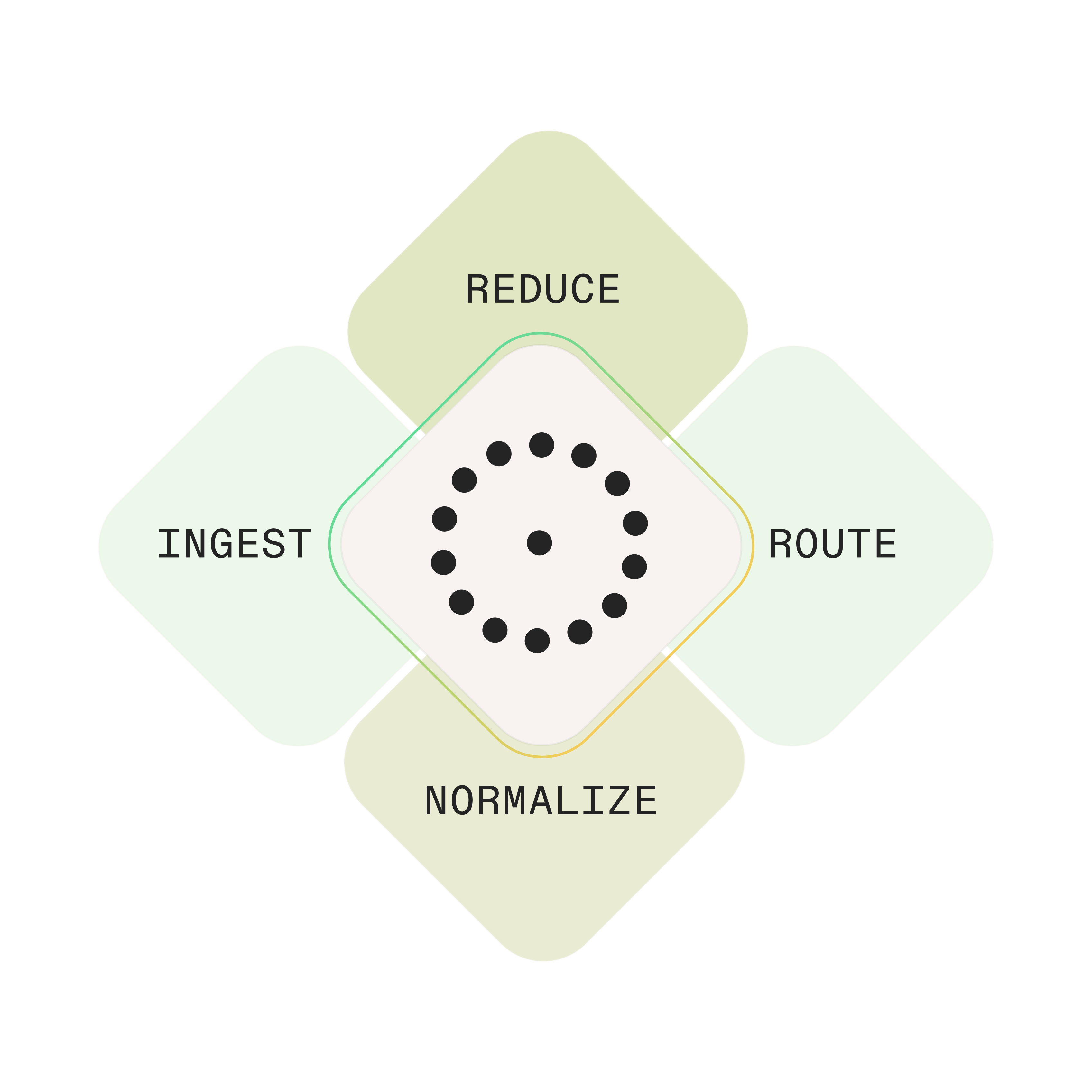
Pick the ingestion pattern that fits your architecture. Monad handles collection, filtering, and delivery so your team can focus on detections and analytics.

De-Risk Your SIEM Migration
SIEM migrations don't happen in a single cutover. Teams need to run their legacy SIEM in parallel while they build confidence in the new environment. Monad makes this practical: route the same data to Databricks and your existing SIEM simultaneously, then shift traffic source by source as you're ready. No duplicate pipelines. No hard cutover risk.

Pick Your Ingestion Pattern
Autoloader stages gzip-compressed JSONL to a Unity Catalog Volume for file-based ingestion with Databricks-native schema evolution. Set up the Autoloader job yourself or let Monad create and schedule it for you. Zerobus streams records directly into Lakehouse, no volume, no SQL warehouse. Pick the pattern that matches how your team already runs Databricks.
.png)

Land Query-Ready Data in Lakehouse
Raw JSON dumped into Databricks means analysts writing ad hoc parsers in notebooks instead of running queries. Monad can normalize data to common schemas, including OCSF, before it lands in your lakehouse, so detections, dashboards, and models run on consistent field names across every source from day one.

Cover Cloud and On-Prem in One Platform
Enterprise security environments span cloud services, SaaS tools, and on-prem infrastructure. Monad's 300+ connectors reach across your entire stack, cloud and on-prem, managed from a single platform. Every connector is tested daily against live data sources, so coverage doesn't silently break.