
October 28, 2026
A Security Field Guide to AI Audit Trails, Now on Amazon

Darwin Salazar
Head of Growth
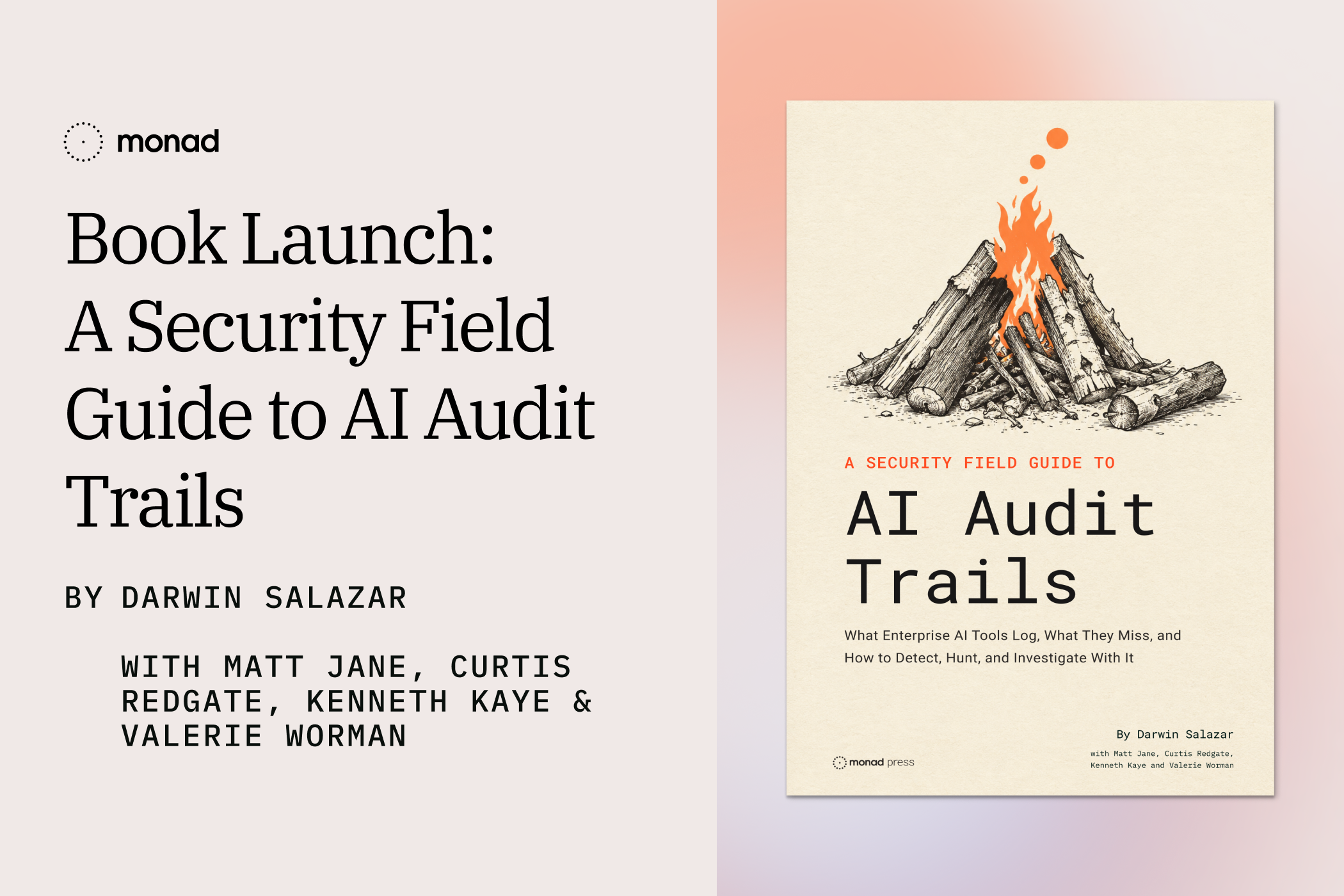
Our refreshed book, A Security Field Guide to AI Audit Trails, is now live on Amazon. It covers log schemas, collection requirements, and detection and investigation use cases across eight AI sources.
We wrote it for teams figuring out which AI sources to collect, what they can detect from them, and where they still need other evidence.
What an approval event actually tells you
At BSides NYC, I wanted to work through some familiar investigation questions with an agent involved. Did a person request that exact action, or did the agent choose it? Did a human approve it, a permission rule allow it, or another model review it?
I asked Claude Code to copy a file containing fake credentials, then compared manual approval, rejection, and auto mode. Both successful runs used the same command, but only one showed that I’d clicked “Yes.”
The rejected attempt appeared in tool_decision without a corresponding tool_result. A detection looking only at results would have missed the blocked attempt.
I ran the scenarios and captured the screenshots on Claude Code v2.1.300, where permission rules and classifier decisions could both appear under source: "config". Literally the next day, v2.1.301 added two fields to tool_decision events:
classifier_verdictrecords the automated classifier’s verdict when that review occurs.permission_moderecords the permission mode active when the call was checked.
Those fields help distinguish approval paths that the earlier records grouped together. I updated the slides before the talk.
The slides and demo setup are on GitHub.
What’s in the October edition
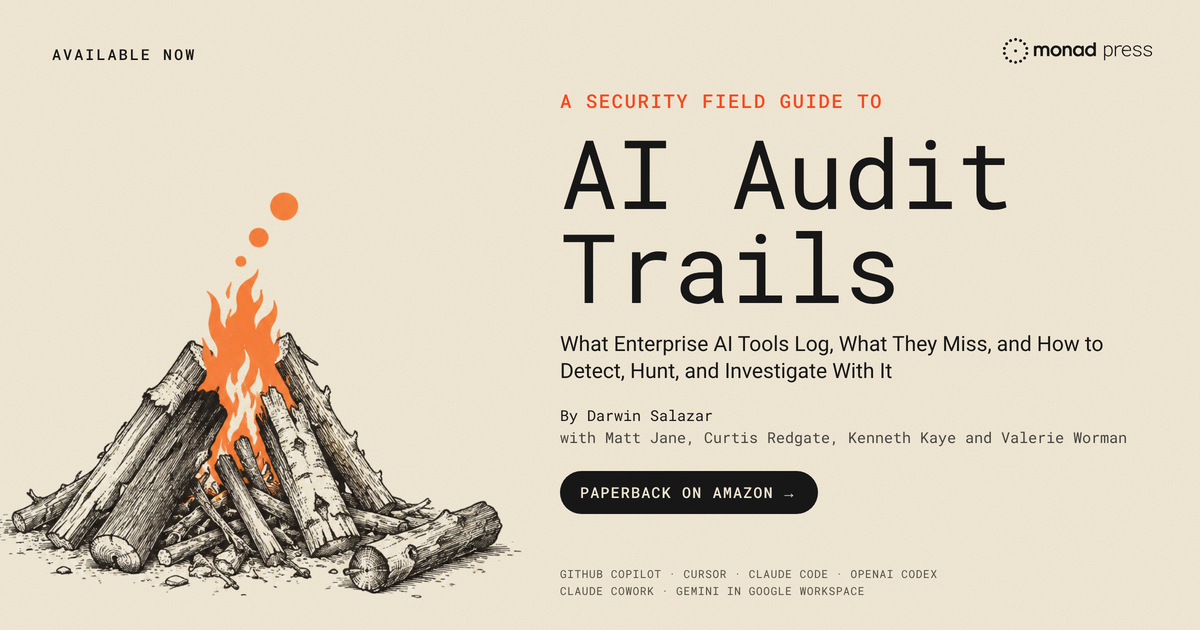
The refresh updates the research, sample records, and collection guidance from our original AI Tooling Visibility guide.
It covers Claude Code, Claude Cowork, OpenAI Codex, Cursor, GitHub Copilot, Anthropic’s Compliance Activity Feed, OpenAI API Platform audit logs, and Gemini for Google Workspace, including Cursor Enterprise and Copilot client runtime telemetry.
Each chapter walks through:
- Events and fields: Sample records, approval sources, and identifiers for connecting related activity.
- Collection: Required plans and permissions, capture settings, retention, and API quirks.
- Detection and hunting: Starting points tied to the fields each source emits.
- Evidence gaps: What needs endpoint, identity, network, Git, or application logs to confirm.
Getting the records into your security stack
Monad offers the market’s most extensive catalog of AI logging integrations. Our 21 AI-tool integrations cover runtime telemetry, compliance activity, conversations, and supporting user and project context.
Monad collects, parses, normalizes, enriches, filters, and routes that data. Teams can unpack nested OpenTelemetry payloads, preserve session and tool-call identifiers, add available identity or asset context, and send the records to their SIEM, data lake, or other security tools.
That preparation matters when you’re joining events or writing a rule against specific fields. The book explains how to interpret the records; Monad handles getting them into the systems where you query, detect, and investigate.
Get your copy
Written by Darwin Salazar, with Matt Jane, Curtis Redgate, Kenneth Kaye, and Valerie Worman.
Get A Security Field Guide to AI Audit Trails on Amazon →
Related content
Darwin Salazar
|
October 22, 2026